I just love the coming-of-age genre.
To define it, it is a genre which focuses on the psychological and moral development from youth to adulthood. Why I love it however, is because it brings out the inner longing to be more than what one believes to be, to create the most memorable experiences possible, and to explore the vast sea of life which is yet to be discovered. It reflects the desire to pursue an ambitious future, or to celebrate the dying moments of an ambitious present. The transition from youth to adulthood starts to develop fears of growing up to live a dull, routine life and how to avoid or accept it. The coming-of-age genre projects these deep feelings of introspection which one has experienced or is currently experiencing while growing up— it makes us feel as if we are the main character of our individual stories.
Content:
Coming-of-age films depict the developments one goes through to become a mature adult ready for the real world. The most important conventions of the coming-of-age genre include romance, delinquency, rebellion, and self-discovery. Whether one relates or has related to these motifs or not, it is perhaps the projection of oneself onto the characters themselves which creates a deep feeling of nostalgia or introspectiveness, producing somewhat of a catharsis which is the centerpiece of the genre.
The largest consumers of this genre of course are young adults, aged 14-19, the largest appeal being the relation to their own lives and on how to deal with it. As aforementioned, these films can be important outlets of catharsis for many. These films provide many adolescents with a vehicle to project their insecurities, problems, and concerns about the coming-of-age experience. It may teach them how to direct their lives, or it may teach them how to accept certain aspects of it.
It is important to note that this genre comes in many different forms, whether it be a horror piece like Stephen King’s IT, or a science fiction piece like Stranger Things.
Production Techniques:
Usually, coming-of-age films are depicted in highschools. In such a piece, The Breakfast Club depicts the stereotypes of the highschool cliques such as nerds, jocks, emos, outsiders, the popular girl, etc., and how these social constructs form the highschool experience which mediates the transition of an adolescent into an adult. They also usually depict the romantic development between characters and what it means to love someone, sometimes depicting the struggle to do so and how this drives the protagonist or characters in the story to undergo an emotional development.
In more modern coming-of-age films, iconography such as the latest digital technology is to accurately portray the changing world of the adolescent characters and how this plays a role in their coming-of-age. Although these attributes may not necessarily impact the film most of the time, they act as a reference to what time frame the film takes place in and how the environment puts into context the actions of the characters and the struggles most relevant to the time. Most universal of this iconography however is alcohol, which depicts the reckless free nature of adolescents and how they choose to indulge in activities which strive for short-term gratification.
In terms of the stylistic choices taken in the coming-of-age genre, realism is the common one as it strives to depict the adolescent experience accurately, regardless of the fictitious elements of the plot. Therefore formalism is usually not seen often in these pieces to preserve this nature.
Marketing:
Being that coming-of-age is regarded as a highly personal experience, movie posters for these types of films place a great emphasis on the protagonist or the characters in the story. This is usually done by placing them on a dull or blurred background, making them the prime focus of the poster. This is THEIR experience, therefore all elements which are not seen as essential to the story are not seen in the poster as to stress the character(s) presence themselves. This technique also creates a feeling of closeness and intimacy, as if it is just them and the viewer directly sharing this experience together.
Samples:

Stranger Things is a popular Netflix sci-fi show surrounding the anomalies and mysteries of Hawkins, Indiana. The show takes place in the 1980s, making it a nostalgia piece for many older audiences and becoming an outlet of anemoia, nostalgia for a time before your own, for many younger viewers. Although centralized on the sci-fi aspects of the show, Stranger Things is a great example of a coming-of-age piece and how regardless of whether a piece is fantasy or takes place in a different era, many of the same experiences which the adolescent characters face can be related to the coming-of-age experience today. In season three, many of the main characters start to leave their 'childish' ways behind to become serious in the world of dating. While these characters undergo this development, one of the characters is left to watch his friends grow up as he marvels in the world of by himself which him and his friends used to love so much before getting girlfriends. Throughout the season, the characters' develop through these iconic teenage experiences which is one of the key motifs of the coming-of-age genre.
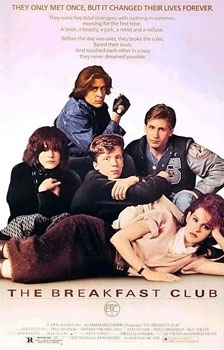 The Breakfast Club is a film which explores the different social cliques of high-schoolers and how the characters learn to look past these generalizations to realize how they each have their own problems and flaws which make them human. The character’s are all different stereotypes of high school students: a jock, a goth, an outsider, a popular girl, and a nerd. The film takes place at school during a morning detention. All the characters start appearing one by one, sitting down isolated from each other uninterested in associating with each other. Through the film however, as the dean leaves them alone to their own devices they start to talk with each other, initially met with strife and conflict, but eventually they understand their different struggles and how alike all of them are despite their labels. This represents the coming-of-age genre as the characters develop a sense of understanding and maturity in which they learn not to judge others so critically, although they speculate heavily throughout the film whether their adolescent culture would look down upon these different cliques associating with each other. Ultimately however, they realize this judgement means less than their friendship.
Other Coming-of-Age Films to Consider:

|
Call Me By Your Name (2016)
|
 |
Lady Bird (2017)
|
 |
The Edge of Seventeen (2016)
|
 |
| Eighth Grade (2018) |


